
2026-10-08 · Matt Reynolds
How Reno's High Desert Dust Affects AC Performance
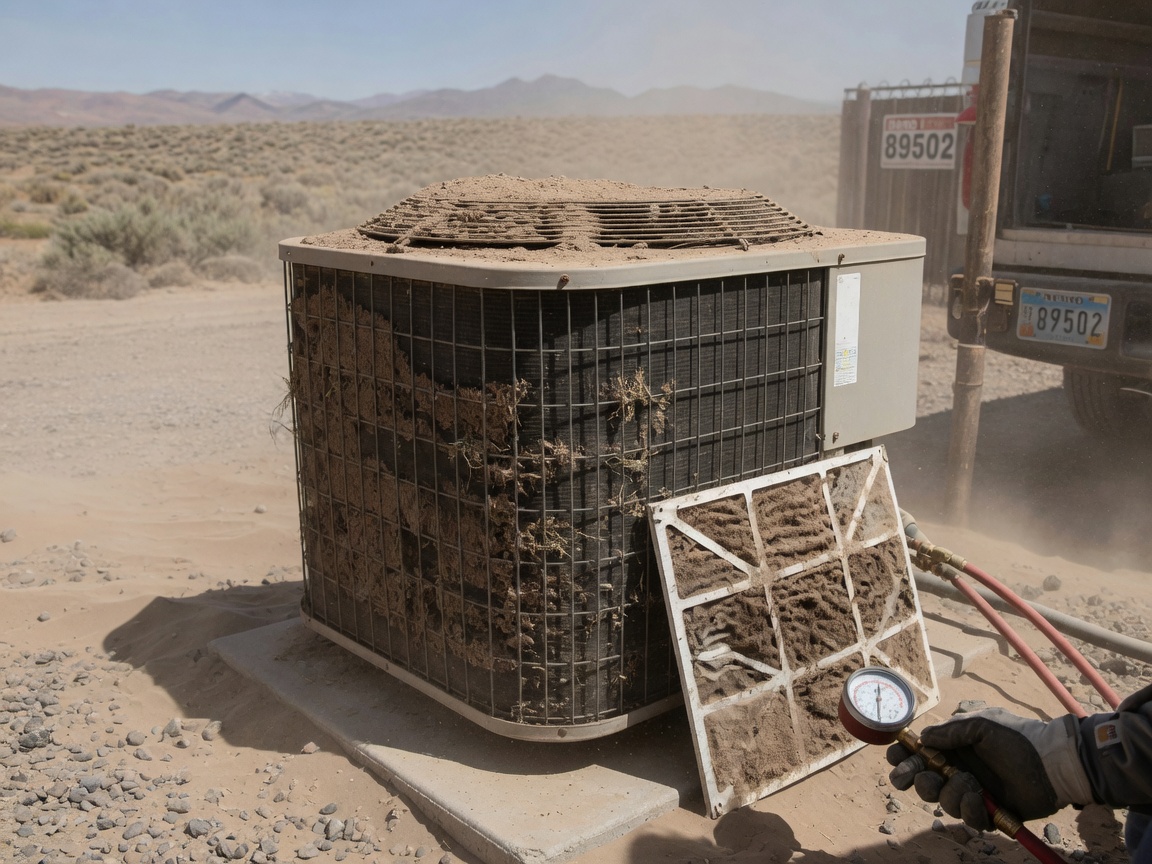
Reno's high desert dust reduces AC airflow and heat transfer within weeks of a filter change when winds carry fine particles from surrounding valleys into homes in Midtown and Old Southwest.
Dust Sources Unique to Reno's High Desert Climate
Reno sits in a high desert where summer heat and winter cold create constant pressure changes that pull outside air through every crack in a home's envelope. The Truckee River corridor and open terrain near Lake Tahoe generate steady winds that carry silica-rich dust from dry lake beds and construction sites in Sparks and Carson City. Older single-story homes in Caughlin Ranch and Damonte Ranch often have original ductwork with unsealed joints that let this dust bypass the filter entirely. Once inside, the particles land on evaporator coils and blower wheels, forming a layer that insulates the metal and blocks heat exchange. Technicians working these neighborhoods see the same pattern every season: systems that ran cleanly in spring show restricted airflow by late July because the dry air holds more suspended grit than coastal climates.
How Dust Loads Coils and Filters Faster Than in Other Regions
Fine dust travels through the return air path and cakes onto the wet evaporator coil surface during the first cooling cycle of the day. In Washoe County the low humidity means coils stay drier longer, so dust does not rinse off as it might in more humid areas. This buildup forces the blower to work harder, which raises static pressure and can trip safety switches on 15-year-old units common in Somersett. Homeowners notice the first sign when supply vents feel weaker even though the thermostat calls for cooling. Regular visual checks of the filter reveal a gray-brown layer within ten to fourteen days during peak summer winds, far quicker than the thirty-day interval many manufacturers list. The same dust also settles in the condensate pan, creating a medium where bacteria grow and further restrict drainage.
Airflow Restriction and Resulting Energy and Repair Patterns
Restricted airflow from dust raises head pressure on the compressor and lowers suction pressure, so the system runs longer cycles to reach the set temperature. In neighborhoods like Midtown where many homes have 1,800- to 2,400-square-foot footprints, this extra runtime adds noticeable cost to monthly bills. Technicians trace repeat capacitor and contactor failures directly to the higher amp draw caused by dirty coils. Linking the issue to temperature swings shows why systems here need attention sooner than in flatter climates; see how rapid changes compound the load in Handling AC Strain During Reno's Rapid Temperature Swings. When filters and coils stay neglected, the same dust migrates into supply ducts, requiring full HVAC duct cleaning to restore proper flow.
Practical Steps to Counter Dust Effects Year-Round
Change the filter every two to three weeks from May through September using a MERV-8 or higher pleated filter rated for the local dust load. Schedule a coil cleaning and blower inspection each spring before the first heat wave arrives. In homes with pets or recent remodels in Caughlin Ranch, add a second check mid-summer. Pair these tasks with AC maintenance that includes checking static pressure so small restrictions are caught before they become compressor issues. When indoor air quality testing reveals elevated particulate levels, an upgrade to a media filter cabinet often cuts the dust reaching the coil by half. Track repair timing against local conditions in Local Factors That Influence AC Repair Timing in Northern Nevada to anticipate when a system in your neighborhood will next need attention.